Is It Better to Buy Near the Coast or Inland in Florida?
Is It Better to Buy Near the Coast or Inland in Florida?
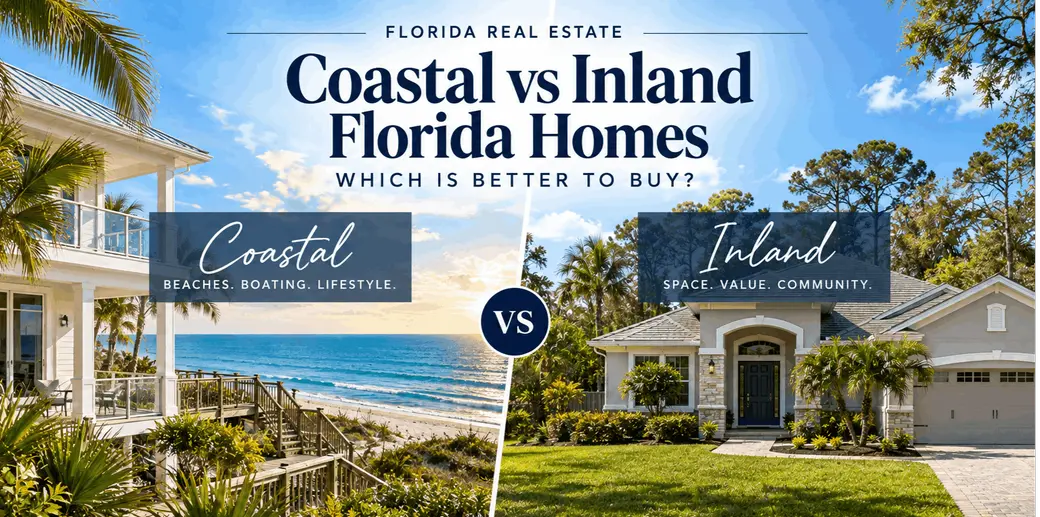
Buying near the Florida coast can give you easier beach and boating access, ocean or river views and the lifestyle many people move to Florida for. Buying inland may offer more house for your budget, potentially lower exposure to storm surge and different insurance costs. The better choice depends on your lifestyle, insurance budget, flood risk, maintenance expectations and the individual property.
The short answer: If being close to the ocean, beach, river or boating is a major part of your lifestyle, the additional costs of coastal ownership may be worthwhile. If your priority is maximizing your home, lot or monthly budget, an inland property may make more sense. In Florida, however, buyers should compare individual homes rather than assuming every coastal property is high risk or every inland property is low risk.
Florida gives buyers a choice that many states simply do not have.
You can live minutes from the Atlantic Ocean or Gulf Coast, on or near navigable waterways, or move inland and still have access to lakes, outdoor recreation, employment centers and major attractions.
The decision is not simply about whether you like the beach.
Where you buy can affect insurance, flood exposure, storm preparation, maintenance, evacuation planning and how much home you can realistically afford each month.
Buying Near the Coast May Appeal to You If...
- Beach or boating access is important to your lifestyle.
- You want to live near the ocean, river or Intracoastal Waterway.
- You value water views or proximity to coastal recreation.
- You are comfortable budgeting for potentially higher insurance and maintenance costs.
- You understand the property's flood and evacuation considerations.
Buying Inland May Appeal to You If...
- You want to maximize the house or lot you can purchase.
- Beach access is less important than space or community amenities.
- You want to reduce exposure to coastal storm surge.
- You prefer newer suburban or master-planned communities.
- You want access to Central Florida employment, attractions or major highways.
Is Homeowners Insurance More Expensive Near the Florida Coast?
It can be.
A home's location is one of several factors that can affect Florida insurance pricing. Properties closer to the coast can face greater exposure to hurricane-force winds, which may affect the hurricane-wind portion of the premium.
But distance from the coast is only one factor.
The age of the home, roof condition and age, construction type, opening protection, roof-to-wall connections and other wind-mitigation features can also materially affect insurability and pricing.
Do not wait until the end of the transaction to price insurance.
When comparing Florida homes, obtain an insurance estimate early enough that the actual premium can be included in your monthly-payment calculation.
Two Homes in the Same Area Can Have Very Different Insurance Costs
This is why simply asking whether coastal or inland insurance is cheaper does not tell the whole story.
Imagine comparing an older inland home with an aging roof against a newer coastal home with a stronger roof system, impact-rated openings and documented wind-mitigation features.
The coastal house may still carry different location-related risks, but the individual characteristics of each property can significantly affect the insurance conversation.
Buyers should review the actual home instead of relying on a general assumption based solely on the ZIP code.
Does Living Near the Coast Automatically Mean You Need Flood Insurance?
Not necessarily.
Flood risk is property-specific. FEMA flood maps identify different types and levels of flood exposure, including coastal areas subject to wave action and inland areas affected by other types of flooding.
A home does not have to be directly on the beach to have flood exposure, and moving inland does not automatically eliminate the possibility of flooding.
Heavy rainfall, drainage conditions, lakes, rivers, canals and low-lying land can create flood concerns away from the immediate coastline.
If you are financing a property located within certain high-risk flood zones, your lender may require flood insurance.
What About Storm Surge?
Storm surge is one of the biggest differences between many coastal and inland locations.
Florida's coastal counties can contain designated evacuation and storm-surge zones because certain areas may be vulnerable to water pushed inland during tropical storms and hurricanes.
When purchasing near the coast, buyers should determine whether the specific property is within an evacuation zone and understand the local evacuation plan before hurricane season.
Flood risk and hurricane planning should be checked by address.
Being several miles inland does not automatically tell you the flood risk, and simply knowing the city or county is not enough.
Are Inland Homes Safe From Hurricanes?
No.
Hurricanes and tropical storms can continue producing damaging winds, tornadoes and extremely heavy rainfall well after they move inland.
Inland Florida homeowners should still pay attention to roof condition, wind mitigation, window protection, drainage and emergency preparation.
The advantage of an inland location is generally reduced exposure to coastal storm surge—not elimination of hurricane risk.
Coastal Homes Can Have Different Maintenance Needs
Salt air, humidity and exposure can be hard on exterior components.
When looking at a coastal property, pay attention to exterior metal, HVAC equipment, railings, windows, doors, fasteners, outdoor fixtures and other materials exposed to the environment.
Waterfront properties can also introduce additional considerations such as seawalls, docks, boat lifts and marine structures.
These features can be valuable, but they should be inspected and included in your maintenance budget.
Coastal Does Not Always Mean Oceanfront
Florida coastal real estate includes much more than beachfront condominiums.
Depending on the area, buyers may find canal-front homes, riverfront properties, Intracoastal communities, homes with boat access and neighborhoods several miles from the beach that still provide a coastal lifestyle.
This is important because two homes within the same coastal market can have very different pricing, insurance, flood and maintenance considerations.
What Do You Gain by Moving Inland?
Moving inland can give buyers access to a much broader range of homes and communities.
In Central Florida, that may include newer construction, larger master-planned communities, golf communities, homes with larger lots and neighborhoods surrounding Florida's many lakes.
Buyers may also be able to obtain more square footage for the same overall housing budget depending on the exact markets being compared.
However, inland communities may have their own costs, including HOA fees, CDD assessments, longer commutes or greater distance from beaches and boating.
How Often Will You Actually Use the Coast?
This is a surprisingly important question.
If you fish, boat, surf, spend weekends at the beach or simply want the ocean to be part of your everyday life, paying more to live closer may be completely reasonable.
But if you expect to visit the beach only occasionally, living farther inland and driving to the coast may give you considerably more flexibility in your home search.
The right answer depends on how you actually live—not simply what sounds appealing while shopping online.
Compare the Total Cost of Ownership
Suppose two houses have similar purchase prices.
The coastal property's mortgage payment may initially look almost identical to the inland property's payment.
But once you compare homeowners insurance, flood insurance when applicable, HOA fees, maintenance and property-specific expenses, the true monthly difference may become clearer.
This is why Florida Homes & Loans recommends evaluating the complete housing expense rather than comparing purchase prices alone.
Coastal vs Inland Florida: Quick Comparison
| Consideration | Near the Coast | Inland |
|---|---|---|
| Lifestyle | Closer to beaches, boating and coastal recreation. | Closer to inland communities, lakes, attractions and employment centers depending on location. |
| Storm Surge | Some properties may be within storm-surge or evacuation zones. | Generally less direct storm-surge exposure farther from the coast. |
| Flood Risk | Can include coastal and storm-related flood exposure. | Flood exposure can still exist due to rainfall, rivers, lakes, drainage and low-lying land. |
| Insurance | Proximity to the coast may contribute to higher hurricane-wind costs. | Location-related wind exposure may differ, but the individual home's condition still matters. |
| Maintenance | Salt and coastal exposure can create additional maintenance considerations. | Generally avoids direct salt-air exposure. |
| Property Options | Beach, river, canal and coastal neighborhoods. | Master-planned communities, larger lots, lake communities and suburban development. |
| Hurricane Risk | Wind, rain, flooding and possible storm surge. | Wind, rain, tornadoes and inland flooding can still occur. |
Questions to Answer Before Making an Offer
Before deciding between a coastal and inland Florida home, try to obtain answers to the questions that affect the actual property.
What flood zone is the home in? Is it within an evacuation zone? What will homeowners and flood insurance cost? How old is the roof? Does the home have documented wind-mitigation features? Are there shutters or impact-rated openings? Is there an HOA or CDD? If the property is waterfront, who maintains the seawall, dock or other marine structures?
These answers are much more useful than simply labeling one house “coastal” and another “inland.”
So, Is Coastal or Inland Florida Better?
Neither is automatically better.
Coastal Florida may be worth the additional expense for a buyer whose lifestyle revolves around the water.
Inland Florida may make more sense for someone who prioritizes space, newer communities or maximizing purchasing power.
The best approach is to compare homes based on the total monthly cost, property-specific risk and how well the location fits the way you plan to live.
Frequently Asked Questions
Is homeowners insurance more expensive near the Florida coast?
It can be. Proximity to the coast can affect hurricane-wind exposure and insurance pricing, although the home's age, roof, construction and wind-mitigation features also matter.
Is flood insurance required for every coastal Florida home?
No. Flood-insurance requirements depend on the individual property's flood risk, financing and other factors. Buyers should check the specific address rather than assuming based on distance from the ocean.
Can inland Florida homes flood?
Yes. Inland flooding can result from heavy rainfall, rivers, lakes, drainage conditions and low-lying areas. Moving inland does not automatically eliminate flood risk.
Are inland Florida homes safe from hurricanes?
Inland properties can still experience hurricane-force winds, heavy rain, tornadoes and flooding. Hurricane preparation remains important throughout Florida.
What is an evacuation zone in Florida?
Coastal counties may designate areas that could need to evacuate during hurricanes and tropical storms, particularly where storm surge is a concern. Buyers can check the specific property through Florida and local emergency-management resources.
Is a newer coastal home better for insurance?
Newer construction and documented wind-resistant features may help with insurability or premium calculations, but location and insurer underwriting still matter. Obtain an actual insurance quote for the property.
Should I get an insurance quote before making an offer?
Getting an early estimate can help you understand the property's true monthly cost. During the transaction, buyers should obtain property-specific coverage information from a licensed insurance professional.
Is living near the coast worth it in Florida?
For buyers who frequently use the beach, ocean, river or boating access, the coastal lifestyle may justify the additional ownership considerations. Buyers who use the coast occasionally may prefer to live inland and travel to the water when they want it.
Trying to Decide Where to Buy in Florida?
Florida Homes & Loans serves both Central Florida and the Space Coast. We can help you compare coastal and inland properties based on the home, location, insurance considerations, financing and the total cost of ownership—not simply the listing price.
This information is provided for general educational purposes and is not legal, insurance, tax, floodplain, engineering or financial advice. Insurance premiums, flood zones, evacuation zones, lending requirements and property risks vary by property and can change. Buyers should verify the specific property with the appropriate government agencies, insurance professionals, inspectors, lenders and other licensed professionals before making a purchase decision.
Categories
Recent Posts