What Are Closing Costs When Buying a House?
What Are Closing Costs When Buying a House?
Closing costs are the upfront fees and expenses required to obtain the mortgage and transfer ownership of the property. They are separate from the down payment and may include lender charges, title fees, government charges, prepaid expenses and escrow deposits.
What Do Closing Costs Include?
Closing costs can include charges paid to the lender, title or settlement company, government agencies, insurance providers and other third parties.
Are Closing Costs Separate From the Down Payment?
Yes. The down payment is the portion of the purchase price not financed by the mortgage. Closing costs are the fees and prepaid expenses associated with obtaining the loan and completing the transfer.
Illustrative example
- Purchase price: $350,000
- Down payment: $17,500
- Estimated closing costs and prepaid expenses: $11,000
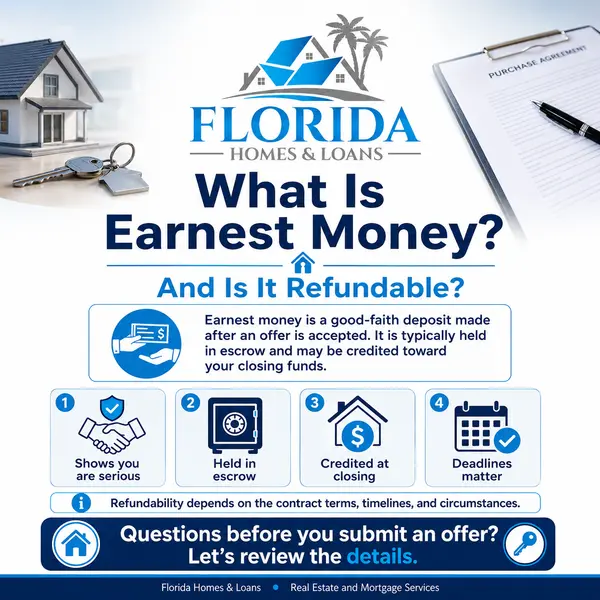
- Earnest money already deposited: $5,000
The final cash to close would reflect these figures plus or minus seller credits, lender credits, prorations and other adjustments.
What Mortgage and Lender Costs May Appear?
Mortgage-related charges can include:
- Origination or lender fees
- Underwriting and processing charges
- Credit-report and verification fees
- Appraisal fees
- Flood-certification or tax-service charges
- Discount points
- Application-related charges when permitted
Discount points are optional upfront charges used to obtain a lower interest rate. Lender credits generally reduce upfront costs in exchange for a higher rate. Compare the complete Loan Estimate rather than evaluating one fee in isolation.
What Title and Settlement Charges May Apply?
Title and settlement charges relate to reviewing ownership records, coordinating the closing, preparing documents and protecting against certain title defects.
- Title search or examination
- Settlement or closing fee
- Lender's title-insurance policy
- Owner's title-insurance policy when purchased
- Document preparation
- Recording and courier-related charges
- Survey charges when required
Who pays specific title-related charges may depend on the contract, local custom and negotiation.
What Are Prepaid Expenses?
Prepaid expenses are amounts collected at closing for costs associated with the loan or ownership that cover a future period.
Common examples include:
- Prepaid mortgage interest from closing through the end of the month
- The first homeowners-insurance premium
- Flood-insurance premiums when required
- Property taxes due or reimbursed through closing adjustments
Prepaid interest depends on the closing date
Prepaid interest generally covers the daily interest between the closing date and the period covered by the first regular mortgage payment. A different closing date can change this amount.
What Is the Initial Escrow Deposit?
If the loan includes an escrow account, the lender may collect an initial deposit at closing to begin funding future property-tax and insurance payments.
This amount is not the same as the regular monthly escrow portion of the mortgage payment. It can change between the Loan Estimate and Closing Disclosure because of the closing date, due dates for taxes and insurance, and updated estimates.
Where Can You Find Your Estimated Closing Costs?
The Loan Estimate is the standard form used to show estimated loan terms, projected payments, closing costs and estimated cash to close.
| Document | What it shows | When you receive it |
|---|---|---|
| Loan Estimate | Estimated rate, payment, loan costs, other costs and cash to close. | Early in the mortgage application process after required information is submitted. |
| Closing Disclosure | Final loan terms, projected payments, closing costs and transaction details. | Generally at least three business days before closing for covered mortgage transactions. |
Compare the documents line by line and ask why a rate, fee or credit changed.
Can Closing Costs Change Before Closing?
Yes. Federal mortgage-disclosure rules place different limits on how much certain estimated charges can change. Some charges cannot increase without a valid changed circumstance, some are subject to aggregate tolerance limits and others can change based on actual third-party or prepaid amounts.
Changes may occur because of:
- A change in loan amount, program or interest-rate lock
- Updated borrower or property information
- A different service provider chosen by the buyer
- Actual insurance premiums or taxes
- A change in the closing date
- New information about the transaction
What Is the Difference Between Closing Costs and Cash to Close?
Closing costs are the fees, prepaid expenses and escrow deposits associated with the transaction. Cash to close is the final amount the buyer must bring.
Cash to close may include:
- The down payment
- Closing costs
- Prepaid expenses and escrow deposits
- Any appraisal-gap contribution
- Other buyer charges
It is then reduced by applicable:
- Earnest-money deposits
- Seller credits
- Lender credits
- Other adjustments and credits
Can the Seller Pay Some of the Buyer's Closing Costs?
A seller may agree to contribute toward certain allowable buyer closing costs. The amount permitted depends on the mortgage program, occupancy, down payment and transaction structure.
The concession should be negotiated in the purchase contract. It cannot generally be converted into unrestricted cash for the buyer, and the property must still support the agreed price when an appraisal is required.
What Is a Lender Credit?
A lender credit reduces certain upfront closing costs. It is commonly provided in exchange for accepting a higher mortgage interest rate.
Lower cash at closing may mean a higher long-term cost
Compare the rate, payment, lender credit and expected length of ownership. A credit can be useful, but it is not automatically free money.
How Can Buyers Potentially Reduce Closing Costs?
- Compare official Loan Estimates from multiple lenders
- Negotiate lender charges when possible
- Consider the tradeoff between discount points and lender credits
- Request an allowable seller concession in the offer
- Review available down-payment or closing-cost assistance programs
- Shop for permitted third-party services
- Review the Closing Disclosure early and question unexpected changes
How Should You Budget for Closing Costs?
- Obtain a documented mortgage preapproval.
- Review the Loan Estimate, including total cash to close.
- Set aside money for inspections not included in lender figures.
- Account for property-specific taxes, insurance and association charges.
- Keep emergency savings after closing.
- Update the estimate when the contract or property changes.
Frequently Asked Questions
What are closing costs when buying a house?
They are the fees and expenses associated with obtaining the mortgage and transferring ownership, including lender, appraisal, title, government and prepaid charges.
Are closing costs separate from the down payment?
Yes. The down payment reduces the amount financed, while closing costs cover the loan, settlement, title transfer and prepaid expenses.
How do you find estimated closing costs?
Review the lender's Loan Estimate. Before closing, compare it with the final Closing Disclosure.
Can closing costs change?
Yes. Some charges are limited by tolerance rules, while prepaid expenses and certain third-party charges may change based on actual figures.
Can the seller pay some buyer closing costs?
Yes, when negotiated and permitted by the loan program and transaction terms.
What is the difference between closing costs and cash to close?
Closing costs are transaction expenses. Cash to close is the final amount due after adding the down payment and other charges and subtracting deposits and credits.
Let’s Estimate the Full Cash Needed Before You Shop
Florida Homes & Loans can review the mortgage, closing costs and home search together so you understand the payment and cash needed before submitting an offer.
Categories
Recent Posts